Air and Pollution – Chemistry Notes 🌍
1. Definitions
Air: The mixture of gases that surrounds the earth, mainly composed of nitrogen (78%), oxygen (21%), carbon dioxide (~0.03%), and trace gases like argon.
Pollution: The introduction of harmful substances or contaminants into the environment that cause adverse effects on living organisms and ecosystems.
Air Pollution: The presence of harmful gases, dust, smoke, or microorganisms in the atmosphere.
2. Sources of Air Pollution
- Industrial emissions: SO₂, NOₓ, CO₂ from factories.
- Vehicle exhausts: CO, NO, hydrocarbons.
- Burning of fossil fuels: Coal, wood, petroleum products.
- Agricultural activities: Pesticides, fertilizers releasing harmful gases.
- Natural sources: Volcanic eruptions, dust storms, forest fires.
3. Effects of Air Pollution
- Respiratory problems (asthma, bronchitis)
- Acid rain formation (SO₂ + NOₓ → H₂SO₄, HNO₃)
- Global warming (CO₂ and greenhouse gases)
- Damage to crops, buildings, and ecosystems
- Depletion of ozone layer (CFCs, halogens)
4. Water Hardness
Hard water: Water that contains high concentrations of dissolved calcium (Ca²⁺) and magnesium (Mg²⁺) ions.
Types of Hardness:
- Temporary hardness: Caused by bicarbonates (Ca(HCO₃)₂, Mg(HCO₃)₂); removed by boiling.
- Permanent hardness: Caused by chlorides and sulfates (CaCl₂, MgSO₄); cannot be removed by boiling.
Problems Caused by Hard Water
- Scales in boilers and pipes
- Poor soap lathering
- Staining of utensils and fabrics
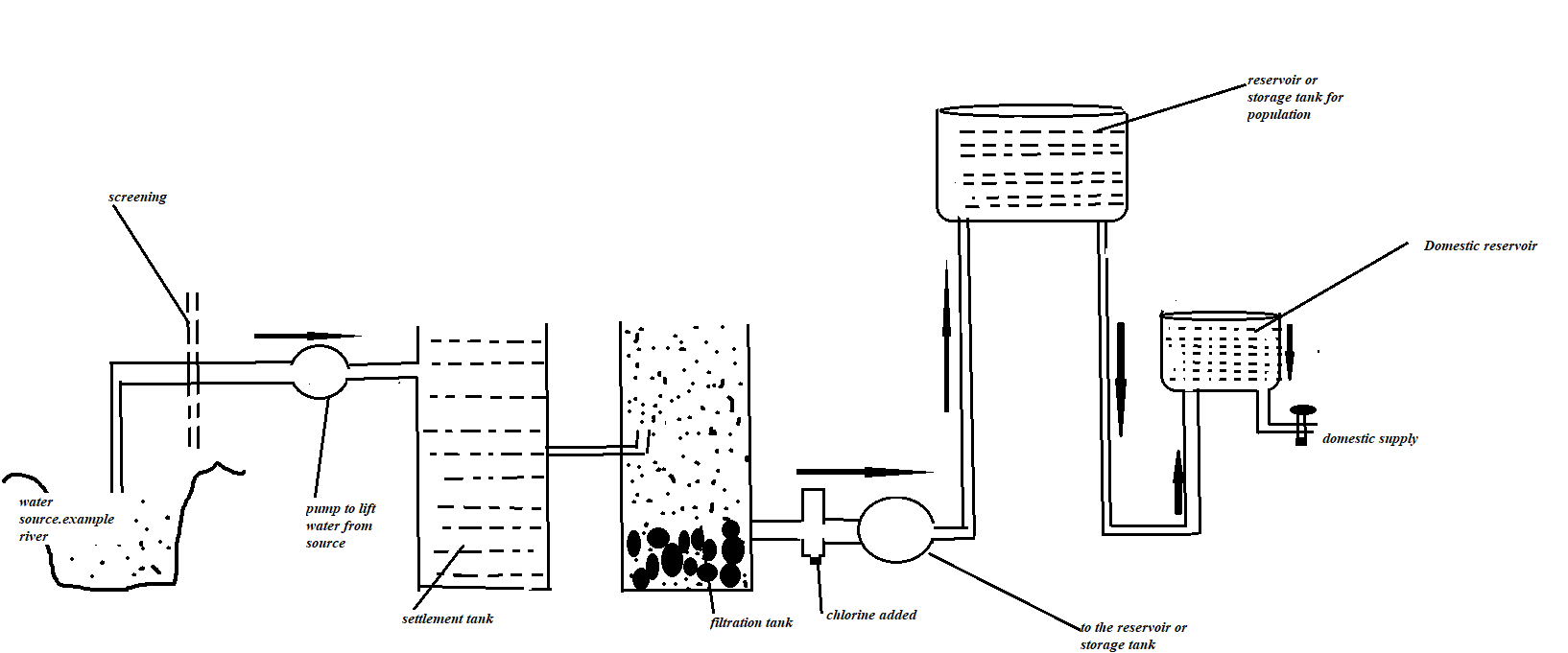
5. Purification of Water
To make water safe for domestic use:
- Filtration: Removes suspended solids using sand filters.
- Boiling: Kills pathogenic microorganisms.
- Chlorination: Adding chlorine or bleaching powder to kill germs.
- Distillation: Evaporation and condensation to remove salts and impurities.
- Softening: Removal of Ca²⁺ and Mg²⁺ ions using ion exchange resins or chemicals (Na₂CO₃).
6. Water Pollution
Water pollution is the contamination of water bodies (rivers, lakes, seas) by harmful substances that affect aquatic life and human health.
Sources of Water Pollution
- Industrial effluents: Heavy metals, acids, alkalis
- Agricultural runoff: Fertilizers, pesticides, nitrates
- Domestic sewage: Pathogens, detergents, organic waste
- Oil spills and plastics
Effects of Water Pollution
- Diseases like cholera, typhoid, dysentery
- Death of aquatic organisms due to oxygen depletion
- Bioaccumulation of toxins in food chain
- Disruption of ecosystem balance
7. Water Treatment for Domestic Use